Wondering if you can actually live car-light on 30A West without turning every coffee run, beach day, or dinner plan into a logistics puzzle? The short answer is yes, but only if you understand how this stretch of South Walton really works. Along 30A, less driving is usually about smart location choices, trail access, and a few well-timed transportation options, not full-on car-free living. Let’s dive in.
Why car-light works differently on 30A West
Scenic Highway 30A is best understood as a string of small beach neighborhoods rather than one big, fully connected town. That matters because your daily ease depends less on public transit and more on how close you are to the places you actually use.
In practical terms, the most comfortable car-light lifestyle usually comes from living near both the Timpoochee Trail and a neighborhood center with shops, dining, and everyday conveniences. If you miss one of those pieces, you may still enjoy the area, but you will likely use your car more often.
The Timpoochee Trail is the backbone
If you want to move around 30A West with less stress, start with the Timpoochee Trail. Visit South Walton describes it as an about 19-mile paved multi-use path running from Dune Allen to Inlet Beach through 12 beach neighborhoods, state parks, the state forest, and 15 rare coastal dune lakes.
The trail is easy, relatively flat, and wheelchair-accessible, which makes it useful for more than just recreation. It can become part of your daily routine for beach access, casual errands, dining, and getting between nearby villages.
That is the key mindset shift. On 30A West, the trail is not just an amenity. It is the transportation backbone.
Why trail mileage matters
The west-end mileage markers help show where car-light living starts to feel realistic. Gulf Place is around mile 3 on the trail and Grayton Beach is around mile 7.7, with access toward Grayton Beach itself, the Shops of Grayton, and Uptown Grayton.
Those are important details because they point to areas where the trail overlaps with a true neighborhood hub. When you can step onto the trail and also reach a cluster of restaurants, shops, or beach access points, your car starts to feel optional more often.
Beach trams can ease the pressure
Walton County Tourism’s Beach Tram adds another helpful layer, especially during busy beach days. The service is free and connects park-and-ride lots to beach access points to reduce parking stress.
On the west end, current service includes 393 Park and Ride with the Ed Walline Express and Dune Allen Local routes. It also includes Grayton Beach Park and Ride with Grayton Express, Blue Mountain Local, and Grayton Beach State Park Express service.
This is not a replacement for living near the places you frequent. Still, it can make beach access much easier and help you avoid one of the biggest friction points on 30A, which is parking.
Cart-share can help in select pockets
In some of the busier and more connected neighborhoods, private cart-share and shuttle services can also fill gaps. Get A Goober describes itself as 30A’s cart-share service and currently serves Grayton Beach, WaterColor, Seaside, and Seagrove Beach.
That makes it more of a targeted convenience than a corridor-wide transportation system. It can be handy for dinners, events, and parking relief, but its usefulness depends heavily on where you live and where you are headed.
Golf carts and LSVs are not the same
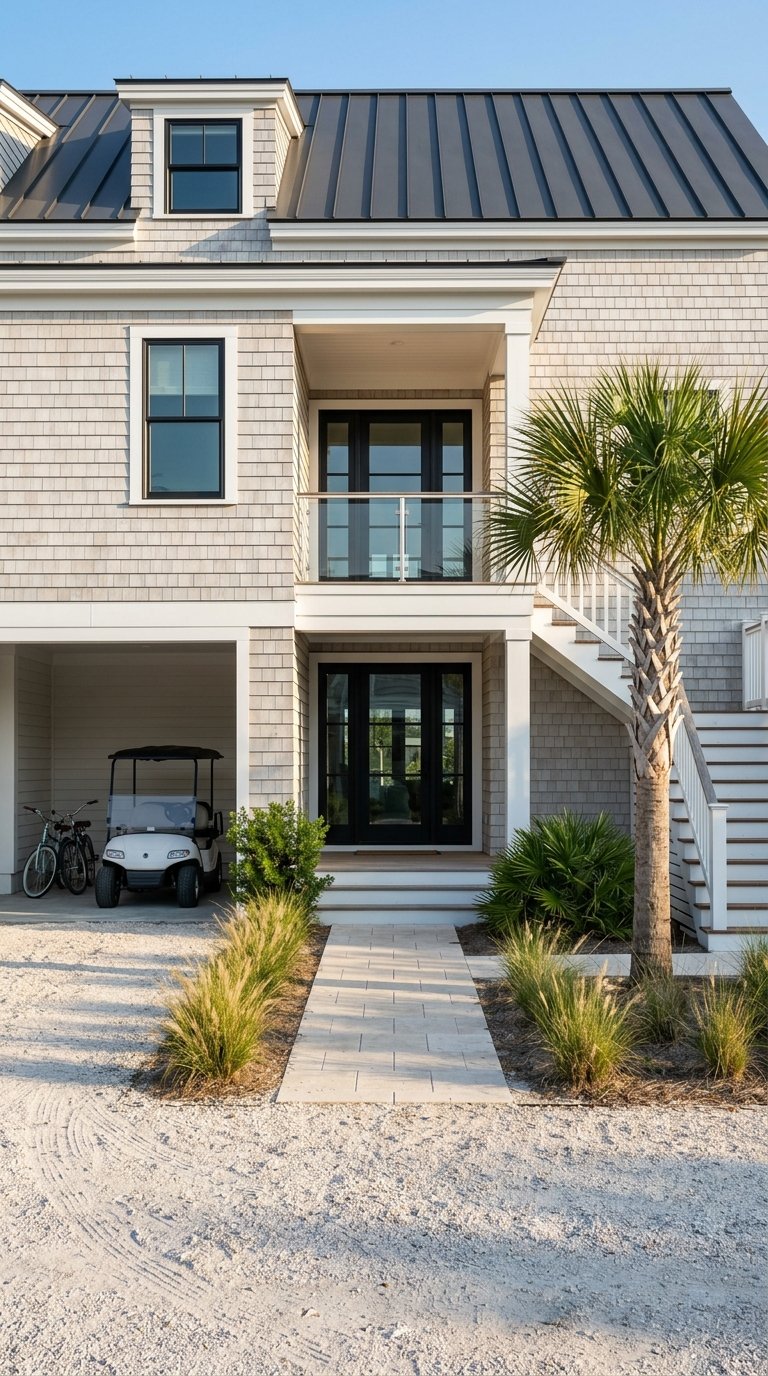
This is one of the most important details for buyers to understand before they assume a small vehicle will solve everything. In Walton County, golf carts are unlicensed and unregistered, and the county states they are not allowed on public county-maintained roadways.
Florida law allows golf carts only on roads a county or municipality has specifically designated for golf-cart use after determining the road can be used safely and posting the proper signs. So if you are picturing a golf cart as a simple substitute for a car, you need to be careful.
What an LSV means in Walton County
A low-speed vehicle, or LSV, is a different category. Under Florida law, an LSV is a four-wheeled vehicle with a top speed greater than 20 mph but not greater than 25 mph.
Walton County says LSVs must be registered, titled, and insured. They are allowed on public roadways with posted speed limits of 35 mph or less.
The practical takeaway is simple: a golf cart may be a neighborhood convenience, but it is not automatically road-legal for general use. If road access matters to your lifestyle, understanding the LSV rules is essential.
Best places for car-light living on 30A West
Not every west-end neighborhood supports the same day-to-day rhythm. If your goal is to drive less, your best fit depends on whether you want walkable conveniences, trail-based access, or a quieter coastal routine.
Gulf Place for everyday convenience
Gulf Place is one of the strongest west-side options for a realistic car-light lifestyle. The town center sits at 30A and 393, and the area is described as a natural stop with neighborhood shops and services.
Because it also connects well to the Timpoochee Trail, Gulf Place offers one of the clearest combinations of movement and convenience on the west end. If you want an easy coffee, meal, or casual outing without planning your whole day around a car, this pocket stands out.
Grayton Beach for versatility
Grayton Beach is arguably the most versatile west-end choice. Visit South Walton describes it as one of the original neighborhoods, with art galleries, restaurants, bars, and access to trails and Grayton Beach State Park.
It also benefits from current Beach Tram service through Grayton Beach Park and Ride and the state park route. That mix gives Grayton a strong balance of character, access, and flexibility for people who want to keep driving to a minimum.
Dune Allen for a quieter routine
Dune Allen is a better match if your ideal day leans more toward nature, trail time, and beach access than frequent walk-to-everything errands. The official neighborhood description highlights miles of trails, rare coastal dune lakes, beach accesses, and an off-the-beaten-path feel.
That can be a great setup if your version of car-light living is calm and outdoorsy. It is less about hopping between shops and more about enjoying a lower-key daily rhythm.
Blue Mountain Beach for low-key coastal living
Blue Mountain Beach offers a similarly relaxed feel. The neighborhood is described as laid-back and low key, with dining options that support an easy coastal lifestyle.
For some buyers, that is exactly the appeal. You can enjoy the trail and nearby spots while keeping a quieter home base, even if it feels less like a traditional village center than Gulf Place or Grayton Beach.
Walkability benchmarks east of the west end
Even if you are focused on 30A West, it helps to understand the corridor’s strongest walkability benchmarks. WaterColor is described as having a small-town atmosphere with clustered dining, while Seaside is explicitly described as walkable, with walkable streets and bikeable trails.
These communities help illustrate what the most pedestrian-friendly pockets along 30A can feel like. They are useful comparison points when you are deciding how much daily walkability you want, and what trade-offs you are willing to make on the west side.
How to choose the right car-light setup
If you are shopping for a home with this lifestyle in mind, focus less on broad map labels and more on daily patterns. Ask yourself how often you want to bike, walk, head to the beach, meet friends for dinner, or reach a small cluster of businesses without moving your car.
A smart car-light setup on 30A West usually includes:
- Close access to the Timpoochee Trail
- Proximity to a neighborhood center like Gulf Place or Grayton Beach
- Easy beach access, whether by foot, bike, or tram
- A realistic understanding of golf cart and LSV rules
- Backup transportation options for peak-season parking or evening outings
The sweet spot is not necessarily the quietest street or the biggest lot. Often, it is the home that lets you do more of your real life within a short ride or walk.
The bottom line on living car-light
The most realistic version of car-light living on 30A West is not fully car-free. It is choosing the right home in the right pocket, then using the Timpoochee Trail as your main connector and supplementing with the Beach Tram or select shuttle options when needed.
On the west side, Gulf Place and Grayton Beach are the strongest bets for everyday convenience. Dune Allen and Blue Mountain Beach make more sense if you want a quieter, trail-centered lifestyle. If you are trying to match your home search to how you actually want to move through 30A, local neighborhood knowledge makes all the difference.
If you want help narrowing down which 30A West neighborhoods fit your routine, lifestyle goals, and property priorities, Andy Mcalexander can help you sort through the options with local insight and a concierge-style approach.
FAQs
Is car-free living realistic on 30A West?
- For most people, a car-light lifestyle is more realistic than fully car-free living. The easiest setup is living near the Timpoochee Trail and a village-style center such as Gulf Place or Grayton Beach.
What is the Timpoochee Trail on 30A?
- The Timpoochee Trail is an about 19-mile paved multi-use path that runs from Dune Allen to Inlet Beach and connects beach neighborhoods, parks, and key destinations along 30A.
Which 30A West neighborhoods are easiest for car-light living?
- Gulf Place and Grayton Beach are the strongest west-end options for everyday convenience, while Dune Allen and Blue Mountain Beach are better suited to quieter, trail-based lifestyles.
Does 30A West have a beach shuttle service?
- Yes. Walton County Tourism’s Beach Tram is free and connects certain west-end park-and-ride lots with beach access points, including service tied to Dune Allen, Grayton Beach, Blue Mountain, and Grayton Beach State Park.
Can you drive a golf cart on public roads in Walton County?
- Walton County states that golf carts are not allowed on public county-maintained roadways unless a road has been specifically designated for golf-cart use under local rules.
What is an LSV in Walton County, Florida?
- An LSV, or low-speed vehicle, is a four-wheeled vehicle that meets Florida’s speed definition and, in Walton County, must be registered, titled, and insured to operate on public roads with posted speed limits of 35 mph or less.